
We define a statement as hate speech when a person or group is insulted, demeaned or discriminated against on the basis of certain identity factors*.
If a statement does not specifically target particular identity factors of a person or group, but is nonetheless offensive, threatening or vulgar, we refer to it as toxic.
*In a narrow definition, such identity characteristics may include gender, age, sexual orientation, religion, nationality, skin colour, disability or ethnic origin, for example.
A broader definition of hate speech may also include derogatory language directed at a person or group based on their social status (e.g. education or income) or political views.
What are the Consequences?
Often times, hate speech has a negative effect on the quality of public discourse: It creates a hostile environment in which only a few people express themselves. This weakens democracy.

Hate speech directly impacts the physical health of the people affected and has severe ramifications for their mental health: Some of the consequences of hate speech include anxiety, depression, post-traumatic stress disorder, suicidal thoughts or self-harm.
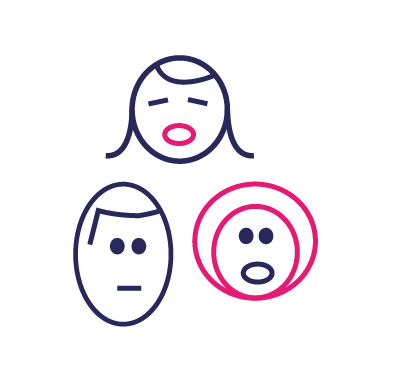
Hate speech threatens democracy because people affected by it retreat from participating in online discourses. Journalists, activists and committed citizens have no longer the courage to comment on topics relevant to society, out of fear of digital violence. This phenomenon is called silencing and affects diversity of opinions and freedom of expression.
Thanks to the data we collect through the Public Discourse Lab, we are learning more about hate speech. We have found that the majority of hateful and toxic comments (between 55 and 70%) come from a very small group (between 0.5 and 1.5% of users). These individuals are highly active: they are responsible for approximately 20% of all comments on the media platform analysed by the Lab.
Our Public Discourse Indicator shows a similar picture: around 5% of users write 78% of hateful content.
We no longer want to surrender the internet to a minority spewing hate : stand up for each other - put up resistance !
Sources
The data is from the following sources
1. Loud Hate - Quiet Retreat, the Competence Network against Hate on the Net, 2024
2. The Chilling: A global study on online violence against women journalists, ICFH & UNESCO, 2019-2022
3. National School Climate Survey, GLSEN, 2021